










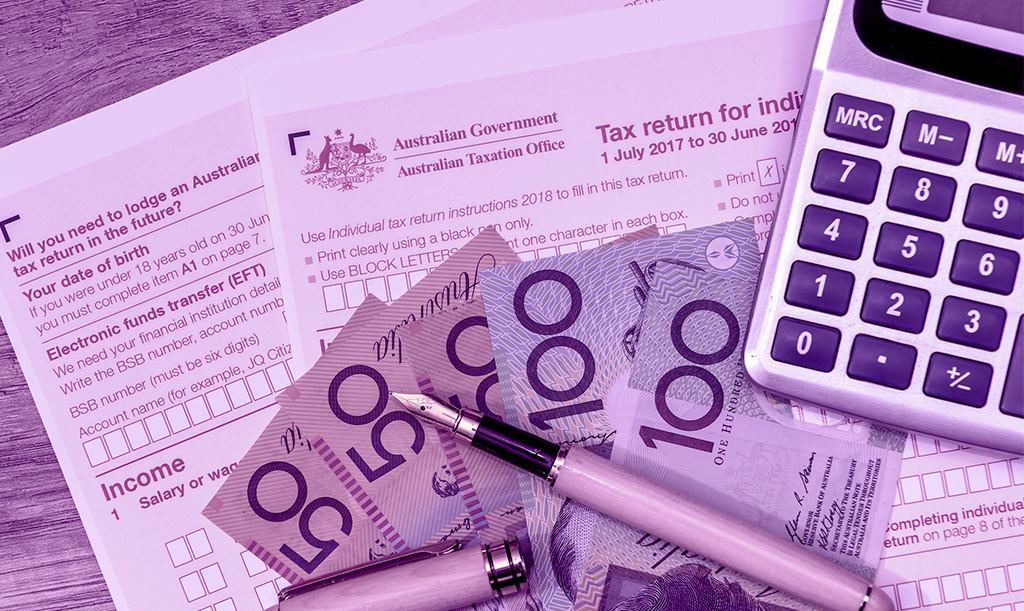
Ongoing tax cuts in Australia and New Zealand impact how much taxpayers retain from each paycheck. Both countries operate progressive tax systems, where different portions of your taxable income are subject to different tax rates.
Knowing how income is taxed is the first step toward paying exactly what you owe and not a cent more. You’ll also get an idea of what your potential take home pay could look like after deductions. Below, we break down the 2026 tax brackets and rates for Australia and New Zealand.
While we’ve tried to ensure accuracy, this guide is not exhaustive. For more guidance, we recommend checking directly with the Australian Taxation Office or the Inland Revenue Department.
Australia

2025-2026 Tax Brackets for Residents
The following personal income tax rates apply to Australian residents for the 2025-2026 financial year, which runs from 1 July 2025 to 30 June 2026.
But from 1 July 2026, the 16% tax rate will be reduced to 15%, with a further reduction to 14% a year later, as announced in the 2025-2026 Federal Budget. These drops can add up to extra dollars a taxpayer can keep, providing relief against inflation pressures.
| Income Tax Rates | Income Tax Bracket (AUD) | Tax Payable (AUD) |
|---|---|---|
| 0% | $0 to $18,200 | Nil |
| 16% | $18,201 to $45,000 | 16c for each $1 over $18,200 |
| 30% | $45,001 to $135,000 | $4,288 + 30c for each $1 over $45,000 |
| 37% | $135,001 to $190,000 | $31,288 + 37c for each $1 over $135,000 |
| 45% | $190,001 and over | $51,638 + 45c for each $1 over 190,000 |
These rates exclude the Medicare Levy and Low Income Tax Offset.
2025-2026 Tax Brackets for Foreign Residents
| Income Tax Rates | Income Tax Bracket (AUD) | Tax Payable (AUD) |
|---|---|---|
| 30% | $0 to $135,000 | 30c for each $1 |
| 37% | $135,001 to $190,000 | $40,500 + 37c for each $1 over $135,000 |
| 45% | $190,001 and over | $60,850 + 45c for each $1 over $190,000 |
Non-residents don’t need to pay the Medicare Levy.
ATO Tax Brackets for Working Holiday Makers
Working holiday makers refer to individuals with a 417 (Working Holiday) or 462 (Work and Holiday) visa subclass in Australia.
| Income Tax Rates | Income Tax Brackets | Tax Payable |
|---|---|---|
| 15% | $0 to $45,000 | 15c for each $1 |
| 30% | $45,001 to $135,000 | $6,750 + 30c for each $1 over $45,000 |
| 37% | $135,001 to $190,000 | $33,750 + 37c for each $1 over $135,000 |
| 45% | $190,001 and over | $54,100 + 45c for each $1 over $190,000 |

Medicare Levy Thresholds
Medicare Levy is an additional 2% levy on taxable income that applies to most Australian residents. The levy serves to fund Australia’s public health system.
| Taxpayer Type | Lower Limit | Upper Limit |
|---|---|---|
| Single | $27,222 | $34,027 |
| Single Seniors and Pensioners | $$43,020 | $53,775 |
| Families | $45,907 (plus $4,216 for each dependent child) | $57,383 (plus $4,216 for each dependent child) |
| Senior and Pensioners (Families) | $59,886 (plus $4,216 for each dependent child) | $74,857 (plus $4,216 for each dependent child) |
If your income is equal to or less than the lower limit, you don’t have to pay the Medicare Levy. If your income is between the lower and upper limits, you qualify for a reduced rate.
Medicare Levy Surcharge Income Tax Threshold and Rates
A Medicare Levy surcharge is an additional levy that applies to higher-income taxpayers without adequate private patient hospital cover during the financial year.
You’ll need to work out your income to determine whether you have to pay the MLS and at what rate.
| Threshold | Base Tier | Tier 1 | Tier 2 | Tier 3 |
|---|---|---|---|---|
| Single | $101,000 or less | $101,001 to $118,000 | $118,001 to $158,000 | $158,001 or more |
| Families | $202,000 or less | $202,001 to $236,000 | $236,001 to $316,000 | $316,001 or more |
| MLS Rate | 0% | 1% | 1.25% | 1.5% |
2025-2026 Tax Offsets
Tax offsets, or tax rebates, reduces the amount of tax you owe after calculating your taxable income. Most offsets are nonrefundable, which means they can reduce your liability but not below zero. We share three examples below.
Low Income Tax Offset (LITO)
If you earn less than $66,667, you may be eligible for some LITO, which the Australian Taxation Office calculates after you lodge your return.
| Taxable Income | Maximum Low Income Tax Offset |
|---|---|
| $37,500 or less | $700 |
| $37,501 to $45,000 | $700 - 5c for each $1 above $37,500 |
| $45,001 to $66,667 | $325 - 1.5c for each $1 above $45,000 |
| $66,668 or more | Nil |
Low Income Superannuation Tax Offset (LISTO)
The LISTO helps low-income workers build retirement savings. If you earn less than $37,000 year, you could receive up to $500, paid directly into your super account.
But starting in 2027, the payment amount will increase to $810, accounting for increases in the Superannuation Guarantee rate. The threshold will also rise to $45,000.
Senior Australian and Pensioner Tax Offset (SAPTO)
If you’re eligible for an Australian government pension or allowance and your rebate income is less than the cut-out threshold for your filing status, you qualify for LISTO. You’ll receive the max offset if your rebate income is less than the relevant shade-out threshold.
| Filing Status | Maximum Tax Offset Amount | Shade-Out Threshold | Cut-Out Threshold |
|---|---|---|---|
| Single | $2,230 | $34,919 | $52,759 |
| Each partner of a couple | $1,602 | $30,994 | $43,810 |
| Each partner of an illness-separated couple | $2,040 | $33,732 | $50,052 |
New Zealand

Income Tax Rates from 1 April 2025
New Zealand income tax rates are progressive, meaning your rate increases as your income increases.
| Tax Rates | Taxable Income Brackets (NZD) |
|---|---|
| 10.5% | 0 - $15,600 |
| 17.5% | $15,601 - $53,500 |
| 30% | $53,501 - $78,100 |
| 33% | $78,101 - $180,000 |
| 39% | $180,001 and over |
Secondary Tax Codes and Rates
If you have more than one income source, you must pay a secondary tax, which depends on the tax code you give your employer or payer.
| Estimated Annual Total Income from All Sources | Secondary Tax Code for the Second Income Source | Secondary Tax Rates |
|---|---|---|
| 0 - $15,600 | SB | 10.5% |
| $15,601 and $53,500 | S | 17.5% |
| $53,501 and $78,100 | SH | 30% |
| $78,101 and $180,000 | ST | 33% |
| $180,001 and over | SA | 39% |
Withholding Tax
Resident Withholding Tax (RWT)
RWT is tax withheld from payments to residents. The payer (e.g., your clients’ bank or fund manager) deducts RWT before the you receive the income. Rates depend on your status and income type:
- Interest: 10.5%, 17.5%, 30%, 33%, 39%
- Dividends: 33%
Non-resident Withholding Tax (NRWT)
Conversely, NRWT is tax withheld from payments to non-residents at the following rates:
- Interest: 15%
- Dividends: 30%
- Royalties: 15%
Corporate Income Tax
Companies operating in New Zealand, whether fully local or as subsidiaries of overseas entities, are taxed at a flat rate of 28% on their net income.
Provisional Tax
If a company or individual’s residual income tax (RIT) liability exceeds $5,000, they have to pay instalments of provisional tax. This helps avoid a large tax bill come year-end.
Fringe Benefit Tax (FBT)
FBT is tax employers pay on non-cash benefits they provide to employees or shareholders. The five main types of FBTs are:
- Motor vehicles for private use
- Low-interest loans
- Free, subsidised, or discounted goods and services
- Contributions to sick, accident, or death benefit funds, superannuation schemes, and specified insurance policies
- Unclassified fringe benefits
| Net Renumeration (NZD) | FBT Rates |
|---|---|
| $13,962 or less | 11.73% |
| $13,963 to $45,230 | 21.21% |
| $45,231 to $62,450 | 42.86% |
| $62,451 to $130,723 | 49.25% |
| $130,724 and over | 63.93% |
Goods and Services Tax (GST)
GST is a 15% tax applied to most goods and services, including imports. If you’re earning more than $60,000 annually from buying or selling, you must register, charge for GST, and claim what you pay. Effectively, you’re collecting taxes for the government.
Some supplies, like exports and duty-free goods, are zero-rated.
3 Ways to Optimise Tax Planning

Know which deductions you can claim
Identifying and claiming all eligible deductions and credits can help reduce your taxable income, potentially lowering the marginal rate at which you pay tax.
For Australian taxpayers, common deductions include: home office costs, vehicle and travel costs for work, laundry and dry-cleaning of uniforms, and property investment expenses.
In New Zealand, deductions could come from running a business, such as operating costs and depreciation on equipment, and investing in properties, like repairs and maintenance.

Maximise retirement contributions
In Australia, employers contribute superannuation (super, for short) equal to 12% of an employee’s ordinary time earnings. That money goes into the employee’s super account, which is then managed and invested by their chosen super fund until they retire.
You can also make additional voluntary super contributions at a cap to boost your retirement savings. The ATO recommends maximising contributions at least 10 to 15 years before retiring.
For New Zealand’s KiwiSaver, the government has dropped their contribution per dollar from 50 cents to 25 cents starting 1 July 2025. People who earn more than $180,000 of taxable income no longer qualify for these contributions.
The default contribution rate will rise from 3% to 3.5% starting 1 April 2026. But if you couldn’t afford this new rate, you can apply for a temporary reduction for a period of three to 12 months from 1 February.

Ensure effective record-keeping
Good record-keeping is the one practice that makes the other tips on this list work. Without documentation, legitimate deductions get left behind. And in the event of an audit, unsubstantiated claims can lead to penalties that outweigh savings.
In Australia, the ATO requires five years of record retention from the date you lodged a return. Meanwhile, New Zealand’s IRD mandates seven years.
Navigate Tax Changes with TOA Global
Staying on top of updated tax provisions while running a firm is a lot to manage, to say the least. And you don’t always have the time and resources to dedicate yourself to it.
TOA Global connects you with Australian-trained outsourced accountants who can support your operations so your team can focus on guiding clients toward smarter financial decisions.
Don’t let tax season slow you down. Book a chat with us today