







For many accounting firms, 2025 was the year of optimization and technological integration. Accountants embraced cloud accounting, invested in cybersecurity, and experimented with AI software, all while trying to navigate the talent shortage that plagues the industry. But while the accounting trends of 2026 are looking a little similar, they’re also a little different.
Keeping a keen eye on what’s staying and what’s changing will keep your firm at the forefront of the competition. This article breaks down the top six accounting industry trends driving 2026.
Accounting Trend #1: Tech Fluency and Literacy

The first of the current accounting trends taking the industry by storm is tech fluency and literacy. As AI technology advances, accountants’ roles will shift from compliance and administrative to more strategic and advisory-focused. This means that modern accountants will have to learn how to use AI more effectively, through proper prompting, for accurate data analytics and financial reporting. All these work together to gather financial insights and support informed decision making.
Karbon reports that 57% of accountants deem technology literacy to be the most critical addition to skill sets for future employees. Keeping up with the tech industry itself will be a useful skill for accounting professionals, given how fast it moves.
Blockchain is one emerging tech in particular that could change the accounting industry. Blockchain is the technology that records transactions in real-time in an open, distributed ledger. This introduces a new level of verification and security. This and other upcoming tech will be things accounting professionals and finance teams must familiarize themselves with to advise their clients and stay competitive.
Accounting Trend #2: Automation
Before AI, automation was the ultimate buzzword among accounting technology trends. Not only did automation usher in the digital transformation of many accounting firms, it also served as a lifeline of those feeling the squeeze of the talent drought.
Today, accountants are leveraging automation and AI to transform their expertise into a more consultative role. The ease of automating various accounting tasks like bookkeeping, bank reconciliation, transaction and invoice processing, auditing, and even AI-enabled tax preparation means that accountants can now spend more time on analysis, interpretation, and advisory.
Accounting Trend #3: Cloud-based Computing

In today’s cybersecurity environment, cloud-based solutions are no longer a nice-to-have—it’s a necessity. Cloud computing provides flexibility for hybrid workforces, especially for firms with global teams. It enhances collaboration and provides data accessibility and centralization for better and faster reporting, pivoting, and decision-making.
Enjoying this post? Discover how the trends have changed over the past few years and impacted the accounting industry.





Accounting Trend #4: Cybersecurity and Fraud Protection

As AI and cloud-based accounting solutions become the norm, the need for tighter cybersecurity and fraud protection has never been more crucial.
With access to valuable client information like credit scores, mortgages, taxes, and investment portfolios, accounting firms are prime targets for cybercriminals. It’s imperative to invest in robust IT systems to protect your firm and client data from increasingly sophisticated threats, such as AI-generated phishing scams.
Accounting Trend #5: Carbon footprint, ESG, Sustainability Pressure

In its 2020 Climate Insights Report, Resources for the Future (RFF) reveals that over 80% of consumers expect businesses to fight climate change. In the US, 87% of surveyed customers support mandatory climate disclosures.
This compels businesses to actively try to lower their carbon footprint and aim to be at least carbon neutral. All this requires unconventional accounting services like carbon accounting, which refers to the process of computing a business’ carbon footprint.
As social advocacy and environmental sustainability become key accounting domains, firms are now expected to conduct carbon accounting and reporting, as well as provide carbon neutrality advisory services. This and sustainability reporting will become popular forms of accounting practices in the business world.
The ability to compute and collect this data means that businesses can now report their ESG metrics. With the international Task Force on Climate-Related Financial Disclosures (TCFD) pushing global organizations to make ESG reporting mandatory by 2030, reporting on sustainability could be a competitive advantage.
Accounting Trend #6: Talent attraction and retention

In the past few years, the talent shortage has gripped the accounting profession. Since 2020, there’s been a 17% decline in the accountant workforce. The proportion of retirements and resignations is greater than those who graduate. The American Institute of Certified Public Accountants (AICPA) reported that 75% of its members reached retirement age by 2020. How can firms find talent amid the shrinking talent pipeline?

The definitive guide to retaining and growing top accounting talent
Make technology a part of your accounting firm
Young graduates are gravitating toward firms that are integrating AI, automation, and cloud computing. Offering a comprehensive, easy-to-use, and updated tech stack and accounting software will help you build a team of younger professionals who are engaged and productive.
Provide work-from-home flexibility
McKinsey reports that 87% of American workers want to work remotely versus onsite. “Workers want to work remotely,” Toni Frana, career expert manager, tells CNBC Make It. Companies “know that it makes sense to offer work flexibility like remote work to help them attract and retain talent.”
Invest in offshore talent

One business strategy to solve the accounting talent shortage is to find global talent. While major markets like the U.S. and Canada may be facing crippling talent shortages, many elite accounting professionals overseas are seeking international opportunities. The Philippines, for example, has a pool of over 200,000 certified public accountants who are not only excellent English speakers, but are also adept to North American accounting and auditing standards.
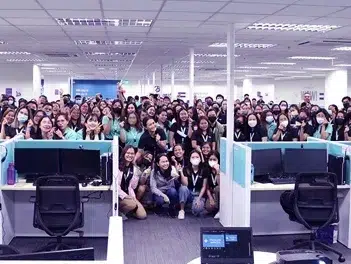
You can refine and ease the search for the best finance talent by partnering with a talent solutions provider, like TOA Global. Trusted by over 1200 firms globally, TOA employs 3,400+ accounting professionals across five state-of-the-art service centers in the Philippines.
Navigate Accounting Industry Trends with a Rockstar Team
Amid these new and volatile accounting industry trends, building and growing a team might seem impossible. Let us help! We’ll connect you to world-class US-trained bookkeepers, accountants, auditors, and assistants. TOA Global is your ultimate global talent solutions partner. Book a session with us to get started.