







If you’re running an accounting firm today, you’re likely knee-deep in dealing with changing regulations and client demands. Unfortunately, you can’t just hire your way out of pressure—there aren’t many qualified people in your locality to do that.
It’s in this climate that outsourced accounting has become closely linked with the industry. Firms are turning to global talent pools to bolster their operational efficiency, catapulting accounting to the top of commonly outsourced business processes, alongside IT.
In this blog, we’ll cover what outsourced accounting entails, how different models work, and what you need to know to make it a smart addition to your firm’s growth strategy.
What is Outsourced Accounting?
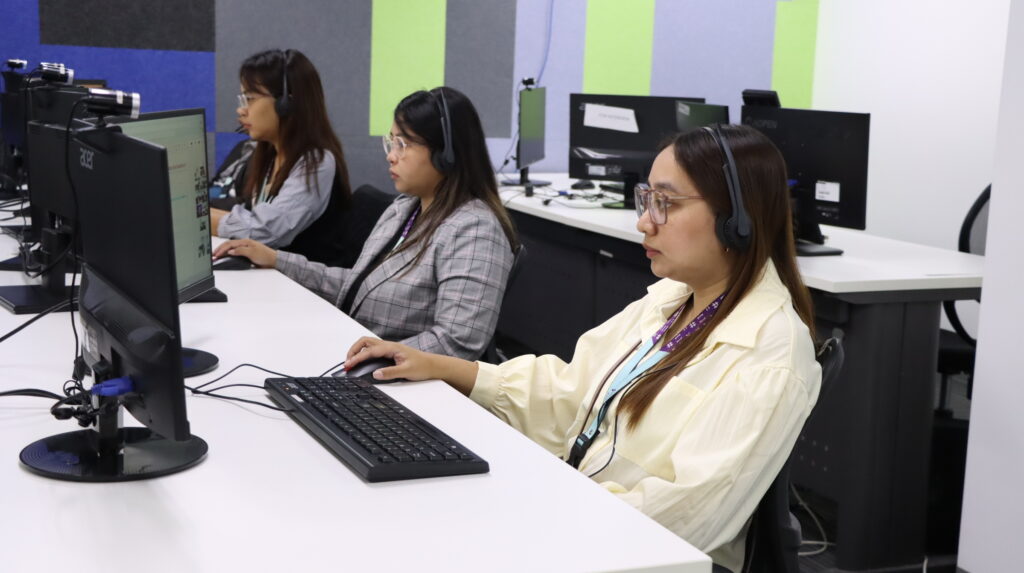
Outsourced accounting is the practice of delegating your firm’s accounting and compliance tasks to external professionals, often in a different country. These skilled talents are pre-vetted by an accounting outsourcing service provider that already has the technology and processes in place to handle entire accounting operations, or a subset of them.
Since your outsourced accounting team works remotely, most setups are cloud-based, enabling real-time data sharing and collaboration. But before you can onboard anyone, your provider will assess your accounting systems, software, and workflows. Then, they’ll create a transition plan tailored to your pain points.
Whether you do outsource all accounting functions or only the repetitive and routine, the decision ultimately comes down to what your firm needs.
5 Accounting Functions Firms Commonly Outsource

Bookkeeping
While necessary, recording daily transactions and managing ledgers are time-intensive tasks that don’t require high-impact decision making, lending themselves well to outsourcing.

Payroll Processing
Managing payroll in-house can quickly consume your work hours, especially for firms with growing headcount or multi-location operations. After all, employee compensation is only part of the picture. You’ve got benefits and tax requirements to handle, too. Accounting outsourcing ensures you pay your people accurately and on time while staying compliant.

Accounts Payable and Receivable
So much admin goes into AP/AR management. And because it impacts cash flow, it often feels like all or nothing. When you outsource accountants, however, you have staff dedicated to reconciling payments and ensuring you don’t have overdue invoices.

Tax Preparation and Compliance
The logistics of filing taxes is daunting enough, but compliance with constantly changing rules is another challenge in itself. Outsourced tax specialists can take that burden off your plate. They proactively study US tax regulations and can also transition into other roles outside tax season, allowing you to maximize their expertise year-round.

Financial Reporting and Analysis
Creating accurate reports entails hours of calculations and reviews. If you have a lean in-house accounting team already juggling multiple responsibilities, errors can pile up. Outsourced finance and accounting teams can manage key documents on your behalf, ensuring accuracy and consistency at all times.

88 Time-Consuming Accounting Firm Tasks You Can Offhore
Accounting Outsourcing Models to Consider for Your Firm
Once you’ve identified which functions to outsource, you’ll need to decide how to structure the relationship. Different models serve different needs:
Project-Based
You hire the provider for specific projects, like year-end close or audit prep. Once the project wraps up, the engagement ends. This model works well for one-time needs or seasonal spikes.
Fully Outsourced
The outsourced accounting provider is your entire accounting department, handling everything from bookkeeping and reporting to tax compliance and financial analysis. You might keep a CFO or controller in-house, or outsource those roles, too.
Hybrid
Some functions are kept in-house while others go external. It depends on where you need targeted support most. For example, you might outsource accounts payable and receivable, but the rest stays local.

What Are The Benefits of Outsourced Accounting Services?
Outsourced accounting is an investment, but with the right provider, it can pay for itself many times over. Here are four ways how:
Access to Expertise
Providers of outsourced accounting services employ professionals experienced in specific accounting functions. Depending on your firm’s needs, they can match you with someone without the typical recruitment delays.
Providers also invest in top-tier accounting tools within a secure IT infrastructure. They spread these costs across many clients, giving you access to better tech than you might afford independently.
Predictable Cost Savings
When you outsource finance and accounting, you only pay for the services you need. None of the costs associated with hiring full-time: salaries, benefits, facilities.
In our 2025 Beyond the Numbers survey, 58% of our respondents reported reduced overhead costs and 62% increased their revenue by an average of 43% after outsourcing.
Relatively Painless Scalability
Your accounting needs fluctuate throughout a given year, but your accounting outsourcing service provider can help you scale up or down without stretching your staff thin or making layoffs.
For instance, if your in-house accountant gets sick or goes on extended leave, you won’t have to put your operations on hold. Providers can give you backup coverage.
Hear about it from one of our clients:
Time for Core Business Functions
And because you’re no longer buried in time-consuming, manual tasks, you’ll have more bandwidth for higher-stakes work. You can stay involved in oversight and decisions, for example, or focus on client relationships and business development.
How Much Does It Cost to Outsource Accounting?
The cost of hiring an outsourced accountant can vary from $500 to $10,000 per month. But the exact price tag depends on their level of expertise, industry-specific requirements, transaction volume, and the complexity of your business.
Below are common pricing structures.
Fixed Monthly Fee
Monthly retainers cover pre-defined services, which makes for predictable budgeting.
Hourly Pricing
You can also pay by the hour based on the expertise you require. Simple outsourced bookkeeping sits at the lower end, while controller or CFO services cost more.
Project-Based Pricing
For one-time or seasonal needs, providers can quote you a fixed price for the entire project.
Per-Transaction Pricing
Some providers charged based on volume: per invoice processed or per employee on payroll.
When selecting a service package, go for one that allows you to add other services as your firm grows. Also, keep an eye out for hidden costs. Accounting outsourcing companies may charge you one-time onboarding fees or extra for services outside the standard scope.
Addressing Common Concerns with Outsourced Accounting Services
Outsourcing has long been the subject of many concerns. The line between legitimate risk and misconception can blur, particularly when execution issues are mistaken for inherent flaws.
Below, we outline five of the most common concerns in outsourced accounting with corresponding best practices.
Greater Cybersecurity Risks
Concern
You’re entrusting sensitive financial data to an external party. What if they get breached? What if their security is weak?
Best Practice
A reputable outsourced accounting provider invests heavily in cybersecurity. “Reputable” is the operative word here. So, before signing an agreement, ask about data protection policies and disaster recovery plans. You can even request evidence of their most recent audit to confirm they meet high standards.
Confidentiality Breaches
Concern
Closely related to cybersecurity is confidentiality. Firms worry that financial information could leak to competitors or become public.
Best Practice
Sign NDAs that legally bind the provider to protect your information. Include provisions about data ownership and what happens to your data if you part ways.
You should also limit data exposure through role-based system access. That way, you can ensure that outsourced team members only interact with data necessary for their role.
Loss of Control
Concern
When outsourcing accounting, your visibility and control over financial operations are compromised, making it difficult to monitor progress and enforce quality standards.
Best Practice
Delegation can be a learning curve, but defining clear expectations from the outset and scheduling regular check-ins can prevent control issues. Document what you need done, when, and to what standard. To track ongoing tasks, use cloud-based project management tools that align with your workflow.
Diminished Quality and Accuracy
Concern
Will your outsourced accounting team meet market standards and understand your business well enough to catch problems?
Best Practice
Partnering with a trusted outsourcing provider allows you to access only the most qualified candidates from popular outsourcing destinations. These professionals not only hold CPA and CA qualifications; they’re also experienced in working with global clients.
That said, review your remote team’s outputs regularly. Most providers welcome feedback, so take that chance to share notes on performance, specifically accuracy, timeliness, and responsiveness.
Cultural and Language Barriers
Concern
Will language gaps and cultural differences get in the way of collaboration?
Best Practice
With rigorous screening, outsourced accounting professionals often have strong English proficiency and experience working with international clients. Nevertheless, you still need standardized communication norms and operating rhythms to reduce ambiguity caused by time zone differences.
To help you make better-informed decisions on whether outsourcing is for you, we compiled a more exhaustive list of misconceptions you’ve likely been told before.
Making the Right Choice in Outsourcing Accounting Services
Outsourced accounting isn’t always the right move, but with a trusted provider, it can yield great results for your firm.
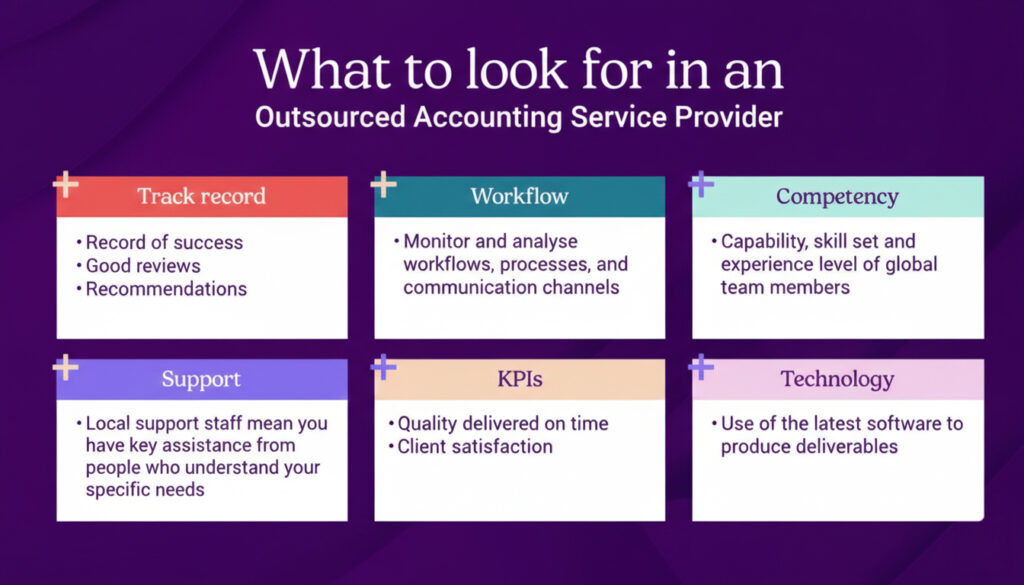
Take time to research providers who can meet your needs without sacrificing quality. Areas to evaluate include their experience and track record in finance and accounting, the tech they use, their approach to training and development, security and compliance standards, and cultural compatibility.
The key, really, is treating the decision like any other important business investment: Do your homework and ask tough questions. Those efforts will all pay off in the long run.
Partner with the Global Leader in Outsourced Accounting
Whether you’ve partnered with global talent teams before or you’re yet to start outsourcing, our elite outsourced accountants at TOA Global can handle your firm’s day-to-day work so you can focus on strategic planning and other business-critical tasks.
All 1,190+ firms we’ve partnered with over the last decade have overcome capacity constraints, thanks to their experienced and skilled outsourced team members in the Philippines.
If you’re aiming for a similar success for your firm, we’re here to support you. Schedule a call with our growth experts today.