
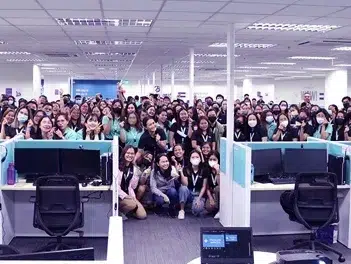


- The Philippines gives accounting firms access to English-proficient talent trained in international accounting standards and proximity to fast-growing Asian markets.
- An Employer of Record Philippines handles employment admin and compliance with local labor laws while firm owners retain operational control.
- Choose a Philippine employer of record to hire and directly manage specialized accounting talent without a local entity. For built-in management and training support, consider outsourcing.
The Philippines has long been recognized as a hub for skilled, English-proficient accounting talent. Every year, hundreds of graduates complete accounting and finance programs aligned with International Financial Reporting Standards (IFRS).
However, hiring from the Philippines—or any country outside your own, for that matter—is an entire maze of due diligence and paperwork. Establishing a legal entity could even be part of the process. For most accounting firms, that’s time and resources they likely don’t have to spare.
An employer of record (EOR) in the Philippines simplifies the equation. As your Filipino accounting team’s legal employer in the country, the EOR manages local employment duties and liabilities while you focus on day-to-day operations and client service.
What is an Accounting EOR in the Philippines
As their designation suggests, an employer of record in the Philippines is a third-party organization named as the official employer of your Filipino team members on all legal documents.
Accordingly, the EOR sets employees up in a payroll system and manages all regulatory requirements related to their employment. Meanwhile, you direct daily work, set schedules, assign projects, and oversee performance.
Related Reading: What’s an Employer of Record (EOR)? A Guide for Accounting Firms
Core Functions of a Philippine Employer of Record
As experts in local employment laws, an employer of record Philippines takes on responsibilities that would otherwise require your own in-country legal entity.
The specific service areas they cover are:
Employment Contracts
In the Philippines, a written contract is not strictly required for an employer-employee relationship to legally exist. However, it’s strongly recommended to have one since employees are presumed regular unless an employment contract proves otherwise.
An employer of record drafts and executes compliant contracts on your behalf, stipulating terms that satisfy Philippine labor laws while protecting your firm’s interests:

- Employment classification (regular, probationary, project-based)
- Compensation structure and payment terms
- Termination provisions and notice periods
- Intellectual property and confidentiality protections
Taxes and Payroll Management
A trusted employer of record manages all payroll operations for your Filipino employees:
- Salary payments in Philippine Pesos or US dollars
- Tax withholdings and remittance to the Bureau of Internal Revenue (BIR) - In the Philippines, this responsibility rests with the employer
- Mandatory 13th-month pay - Bonus equal to one-twelfth of total annual basic salary, released by December
- Overtime and holiday pay calculations
Mandatory Benefits Administration
Philippine labor laws mandate statutory benefits that your employer of record administers:
- PhilHealth: Health insurance program funded through government subsidies and employer and employee contributions
- Social Security System (SSS): Coverage for employee's death, disability, sickness, maternity, retirement, and unemployment
- Pag-IBIG Fund (Home Development Mutual Fund (HDMF): Housing loans and savings programs for Filipino workers to improve their quality of life
Contribution rates differ across regions, industries, and workforce sizes. With an EOR, you save time and effort learning these requirements yourself since the EOR has the local expertise and resources to manage them for you.
Leaves Entitlements
Employees who complete at least a year of service receive a minimum of five days paid Service Incentive Leave. Many employers, however, offer additional days that employees can use for vacation or sick leave.
Other mandatory leave entitlements include:
- Maternity Leave: 105 days with full pay for female employees, regardless of civil status
- Paternity Leave: 7 days with full pay for married male employees, regardless of employment status
- Parental Leave: Additional 7 days for qualified solo parents
On top of these entitlements, employees observe regional and national public holidays as designated by the Philippine government. Your chosen EOR tracks these time-offs across employee categories, ensuring full compliance at every step. Some providers even offer platforms where you can view requests and usage in real time.
Termination Processing
While you make all the decisions about your Filipino employees' performance and timing of termination, the employer of record ensures that process adheres to local labor laws:
- Separation pay calculations: If termination is due to authorized causes (redundancy, business closure, employee illness), an employee is entitled to 1/2 month pay for every year of service
- Final payroll processing including accrued benefits and unused leaves
- Certificate of employment and clearance procedures
- Government notification of employment changes
By facilitating clean, compliant separations, the EOR protects your practice from wrongful termination claims. At the same time, departing employees receive their legal entitlements.
Benefits of Partnering with an Employer of Record in the Philippines
The most straightforward answer is access to top Filipino talent. The Philippines has a largely working-age population, with a median age of 26.1 years in 2025. This relatively young demographic brings strong English proficiency and a solid educational foundation.
With accounting and finance among the most popular university programs, the Philippines produces hundreds of professionals ready to apply their skills from day one. An EOR helps firms tap into this talent pool without the hassle—not to mention, cost—of setting up a physical presence.
But beyond talent, employer of record Philippines offers operational advantages:
Compliance with Philippine Labor Laws
If our section on EOR functions is any indication, employment regulations in the Philippines are extensive. Global companies interested in hiring Filipino accounting professionals often lack the capacity to thoroughly review each handbook made accessible by the Philippine government to the public. However, non-compliance is out of the question, lest they be ready to face serious consequences.
EOR service providers transfer such risk away from hiring firms. If compliance failures do happen, they assume complete liability as the legal in-country employer. All the while, they ensure your Philippine team members receive proper treatment under local laws.
Fast Onboarding
Setting up a legal entity in the Philippines gives you full control over hiring and onboarding. But you’re also looking at months of bureaucracy dealing with government registrations and permit applications. By the time you’re ready to hire, that Filipino accountant you interviewed may have already accepted another offer.
Employer of record services collapse this timeline; you can have that same accountant on payroll within one to two weeks. They receive onboarding comparable to what you’d provide a US hire, complete with a welcome packet, benefits and policy briefings, and system access.
Streamlined Management of Payments
International payments are, for lack of a better term, complicated. There’s conversion, and then there are exchange rate fluctuations. Adding another layer of complexity is local tax regulations. Managing these alongside your onshore payroll can quickly become overwhelming.
An employer of record streamlines the process by handling payroll locally, ensuring your team in the Philippines is paid accurately and on time.
Focus on Core Business
Perhaps the most valuable benefit, an EOR lets partners and managers focus on what they do best: client service and business development. Every hour not spent on payroll disputes or government compliance tasks is an hour dedicated to revenue-generating work.
Related Reading: Employer of Record Pros and Cons: A Guide to Navigating EOR
When to Partner with an Employer of Record in the Philippines
You're interested in Filipino talent
If you’re curious about the expertise of Filipino accounting professionals but cannot justify establishing a legal entity, an employer of record is a low-risk entry point.
Hire a small team, evaluate their performance and cultural fit, then decide whether to expand your operations. That way, you validate the business case before making investment spends.
You're interested in the ASEAN market
The Philippines is a member state of the Association of Southeast Asian Nation (ASEAN), projected to become the fourth largest economy by 2030. Establishing operations through an EOR Philippines positions your firm to serve clients with business interests across the region, including Singapore, Vietnam, and Malaysia.
You need to increase capacity fast
If tax season is on the horizon and you’re understaffed, an employer of record can have experienced Filipino professionals take on routine tasks within a few weeks while your local staff focus on tax prep and client advisory.
Getting Started with Philippine Accounting Talent
An employer of record in the Philippines handles the bureaucracy that previously kept Filipino accounting talent out of reach. But it’s not the only option. For many practices, outsourcing offers similar benefits, often with fewer administrative demands.
Through outsourcing, you work with a service provider that fully manages a pool of accounting professionals. You’re not hiring employees directly, nor are you responsible for training, quality control, and performance. A reputable provider takes care of those, making sure your offshore team stays aligned with your firm’s standards and goals.
Ultimately, whether you choose EOR services or outsourcing, engaging Filipino accounting professionals gives you the capacity to serve more clients and sustain healthy margins. It’s up to you to decide which model aligns best with your management preferences and growth timeline.
At TOA Global, we’ve partnered with 1,190+ accounting firms in building world-class offshore teams powered by US-trained Filipino professionals. If you want to experience how outsourcing can support your growth plans, our staffing experts can tailor a plan for you.